
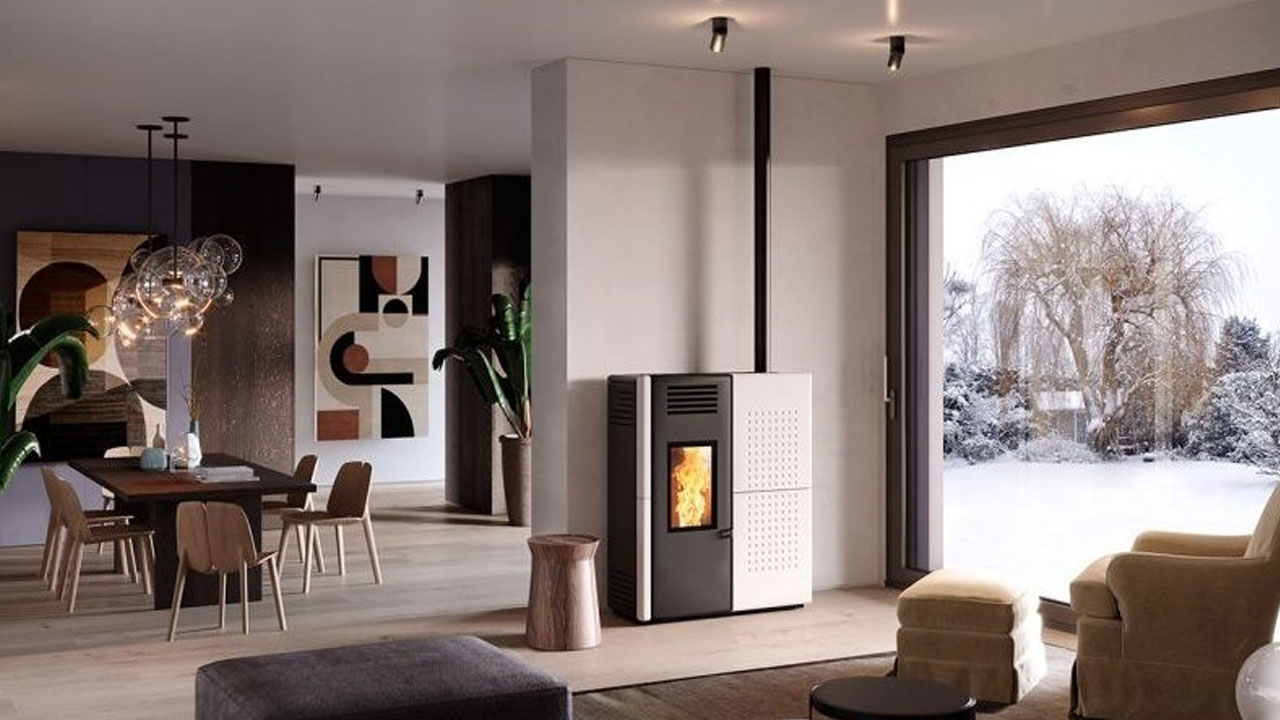
Pellet stoves are a popular heating option in Portugal because they are efficient, automatic and easier to control than traditional wood stoves.
However, many homeowners and expats are unsure whether a pellet stove needs a traditional chimney or whether it can be installed with a simpler flue system.
Understanding the difference between a chimney and a pellet stove flue helps homeowners plan installation correctly and avoid safety or performance problems.
In Portugal, pellet stoves do not always need a traditional masonry chimney, but they do require a properly installed flue system to remove combustion gases safely.
Do Pellet Stoves Need a Chimney?
Pellet stoves need a way to evacuate smoke and combustion gases, but this does not always have to be a traditional chimney.
Unlike wood stoves, pellet stoves usually use a fan-assisted exhaust system. This means the appliance helps push combustion gases out through a flue.
In practice, a pellet stove may be connected to:
• an existing chimney
• a stainless steel flue
• an external wall flue
• a vertical flue system
The correct solution depends on the property, stove model and installation requirements.
Chimney vs Flue: What Is the Difference?
Many homeowners use the word “chimney” to describe any smoke outlet, but technically there is a difference.
A chimney is usually a built-in structure, often made of masonry, that runs vertically through the house or wall.
A flue is the duct or pipe that carries smoke and gases away from the appliance.
In many pellet stove installations, the most important requirement is not a traditional chimney, but a correctly installed flue.
Common Pellet Stove Flue Options
| Flue Option | Description | Typical Use |
|---|---|---|
| Existing chimney 🧱 | Uses a chimney already present in the house | Older homes with fireplaces |
| Stainless steel flue 🔩 | Metal pipe system installed for the stove | Most new installations |
| External wall flue 🏠 | Flue routed through an outside wall | Renovations and some apartments |
| Vertical insulated flue 🔝 | Flue rises vertically for better evacuation | Recommended for performance and safety |
A vertical flue is generally preferred because it supports better exhaust flow and reduces the risk of smoke or odour problems.
Can You Use an Existing Chimney?
Yes, in many cases a pellet stove can be connected to an existing chimney.
However, the chimney must be checked first.
Important points include:
• chimney condition
• internal diameter
• height
• cleanliness
• possible need for lining
Older masonry chimneys in Portugal may not always be suitable without adaptation.
A professional installer may recommend inserting a stainless steel liner inside the existing chimney to improve safety and performance.
Can a Pellet Stove Vent Through a Wall?
Some pellet stove installations can use a wall outlet, depending on the stove model and local installation conditions.
However, this must be carefully planned.
Wall outlets may be affected by:
• nearby windows
• balconies
• neighbouring properties
• wind exposure
• smoke direction
• building regulations
For this reason, a simple horizontal outlet is not always the best or safest solution.
A vertical flue, even when routed outside the building, often provides better performance.
Why Proper Flue Installation Matters
The flue system is essential for safe operation.
A poor flue installation can cause:
• smoke or odours
• poor combustion
• soot buildup
• error messages
• reduced efficiency
• safety risks
Even though pellet stoves are fan-assisted, they still require proper exhaust design.
Pellet Stoves in Apartments
Installing a pellet stove in an apartment can be more complex than in a house.
Issues may include:
• building rules
• condominium approval
• external wall permissions
• flue routing
• distance from neighbours
Before installing a pellet stove in an apartment, homeowners should check building regulations and confirm whether the flue can be installed legally and safely.
Pellet Stoves in Villas and Houses
In detached houses, installation is usually more flexible.
Possible options include:
• using an existing chimney
• installing a new vertical flue
• routing an external flue along the outside wall
• placing the stove near an outside wall
Detached houses usually offer more options, but correct design is still essential.
Safety Considerations
A pellet stove flue must be installed according to manufacturer instructions and safety standards.
Important safety considerations include:
• correct pipe diameter
• proper sealing of joints
• suitable flue materials
• safe distances from combustible materials
• correct terminal position
Professional installation is highly recommended to ensure safety, correct operation, compliance with standards and to maintain the validity of the manufacturer’s warranty.
What Expats Should Know
Many expats assume pellet stoves are easier to install than wood stoves because they use fan-assisted exhaust.
While pellet stove installation can sometimes be more flexible, it still requires technical planning.
Before buying a pellet stove, homeowners should confirm:
• where the stove will be installed
• how the flue will exit the house
• whether an existing chimney can be used
• whether electricity is available nearby
• whether the installation complies with safety rules
This helps avoid unexpected installation problems.
Frequently Asked Questions
Do pellet stoves need a chimney?
Pellet stoves need a flue system, but not always a traditional masonry chimney.
Can a pellet stove use an existing chimney?
Yes, if the chimney is suitable and in good condition. It may need a liner or adaptation.
Can a pellet stove vent through a wall?
In some cases, yes, but the installation must follow safety rules and manufacturer requirements.
Is professional installation necessary?
Yes. Professional installation is strongly recommended for safety, correct operation and warranty validity.
🔗 Related Guides
If you want to explore the different heating systems used in Portuguese homes in more detail, these guides explain how each solution works and when it is most suitable.
Heating a House in Portugal
(overview of heating solutions for Portuguese homes)
Wood Heating
(wood stoves and fireplace inserts for powerful natural heat)
Pellet Heating
(automatic heating systems using compressed wood pellets)
Wood Cook Stoves
(traditional appliances that combine cooking and home heating)
Outdoor Fire
(fire pits, outdoor fireplaces and cooking systems for terraces and gardens)
🔗 Where to Find Heating Solutions in Portugal
Many of the heating systems discussed in this article are available from Smartfire, specialists in wood heating, pellet stoves and outdoor fire solutions.
Based in Portugal, Smartfire has helped thousands of homeowners choose the right heating systems for their homes, offering carefully selected products designed for reliability, efficiency and long-term performance.
The Smartfire team also provides support in English and works with installation partners across several regions of Portugal, including the Algarve.