
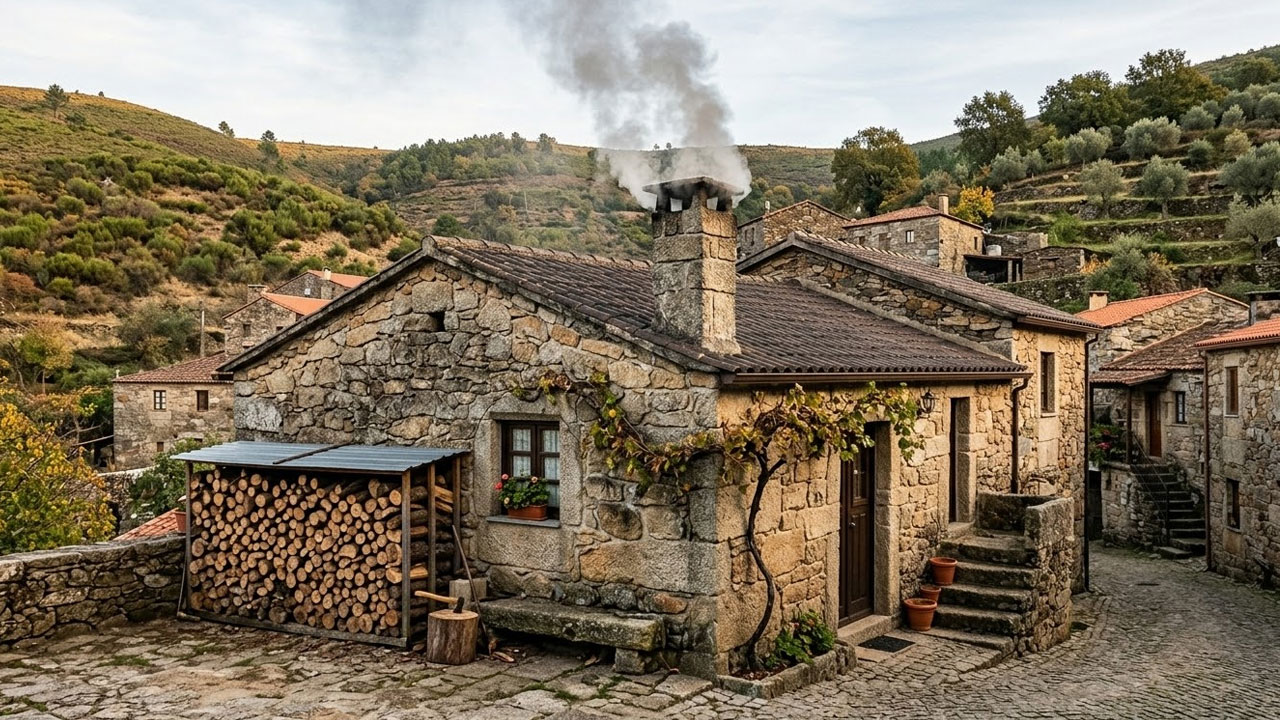
Many people who buy property in Portugal fall in love with traditional stone houses. These homes are full of character and history, often located in beautiful rural areas or historic villages.
However, stone houses behave very differently from modern insulated buildings. While they can remain pleasantly cool during hot summer months, they may also feel colder indoors during winter. Many traditional stone houses in Portugal require specific heating solutions because thick walls and heavy materials retain cold during winter.
Understanding how stone houses retain and lose heat helps homeowners choose the most effective heating systems for year-round comfort.
In traditional Portuguese stone houses, indoor comfort during winter depends less on outdoor temperatures and more on how the building stores and releases heat.
Why Stone Houses Can Feel Cold in Winter
Stone is a very dense building material with high thermal mass. This means it can absorb and store heat, but it also takes time to warm up.
In many traditional Portuguese houses, thick stone walls were designed primarily to keep interiors cool during the hot summer months. While this works very well in warm weather, it can create challenges during colder winter periods.
Several factors contribute to the colder feeling inside stone houses:
• walls absorb heat slowly
• many houses have limited insulation
• floors are often tiled or stone
• windows may be single-glazed in older buildings
Because of these characteristics, indoor temperatures in winter can sometimes follow outdoor conditions more closely than expected.
How Stone Houses Behave Thermally
Stone buildings react differently to heating compared with lighter modern structures.
At the beginning of winter, the walls and floors of a stone house may feel cold because they have stored the lower temperatures from previous weeks. Once the structure is warmed, however, it can help maintain a stable indoor temperature.
This means heating systems often work best when they provide consistent warmth rather than short bursts of heat. For many homeowners, the goal is not only to warm the air inside the house but also to gradually warm the structure itself.
Typical Winter Conditions in Stone Houses
Indoor temperatures in stone houses vary depending on several factors:
• wall thickness
• level of insulation
• window quality
• sun exposure
• presence of heating systems
Even in regions with mild winters, the interior of an unheated stone house may feel noticeably cooler than the outside temperature suggests.
Typical winter outdoor temperatures in Portugal include:
• Algarve: 8–16°C
• Lisbon region: 7–15°C
• Central Portugal: 5–13°C
• Northern Portugal: 4–12°C
Without heating, indoor temperatures in stone houses can remain several degrees below comfortable living levels during evenings and nights.
Best Heating Systems for Stone Houses
Because stone houses warm up slowly, heating systems that provide steady and powerful heat output tend to perform best.
Common solutions include:
• wood stoves
• pellet stoves
• fireplace inserts
• wood cook stoves
• heat pumps
Wood stoves and pellet stoves are particularly popular because they can quickly heat living areas and gradually warm surrounding walls.
Comparing Heating Options for Stone Houses
| Heating System | Advantages | Considerations |
|---|---|---|
| Wood Stove 🔥 | Strong radiant heat, excellent for large living spaces | Requires firewood storage |
| Pellet Stove ⚙️ | Automatic operation and steady heat output | Needs electricity and pellet supply |
| Fireplace Insert 🏡 | Improves efficiency of existing fireplaces | Installation required |
| Heat Pump ❄️➡️🔥 | Provides heating and cooling | May feel less powerful in very cold interiors |
Each system has advantages depending on the layout of the house and how it is used.
Heating the Main Living Area
In many Portuguese homes, heating is concentrated in the living room or main social area rather than distributed throughout the entire house.
This approach works particularly well in stone houses because:
• the main living space warms quickly
• the building structure gradually absorbs heat
• energy consumption remains lower
Wood stoves and pellet stoves are therefore commonly installed in central living areas where families spend most of their time.
Do Expats Often Install Heating in Stone Houses?
Many international homeowners decide to install heating systems after experiencing their first winter in a traditional Portuguese property.
Stone houses that feel pleasantly cool in summer can sometimes feel surprisingly cold during winter evenings. Installing a wood stove, pellet stove or fireplace insert is often one of the most effective ways to improve indoor comfort.
These systems also suit the character of traditional houses and are widely used across rural regions of Portugal.
Frequently Asked Questions
Are stone houses in Portugal cold?
Stone houses can feel colder indoors during winter if they do not have heating systems, particularly in the evening when temperatures drop.
Do stone houses stay cool in summer?
Yes. One of the advantages of thick stone walls is their ability to keep interiors cooler during hot summer weather.
What heating system works best in a stone house?
Wood stoves, pellet stoves and fireplace inserts are among the most effective heating solutions because they produce strong, steady heat.
Is insulation important in stone houses?
Improving insulation around roofs, windows and doors can significantly improve comfort and reduce heating needs.
🔗 Related Guides
If you want to explore the different heating systems used in Portuguese homes in more detail, these guides explain how each solution works and when it is most suitable.
Heating a House in Portugal
(overview of heating solutions for Portuguese homes)
Wood Heating
(wood stoves and fireplace inserts for powerful natural heat)
Pellet Heating
(automatic heating systems using compressed wood pellets)
Wood Cook Stoves
(traditional appliances that combine cooking and home heating)
Outdoor Fire
(fire pits, outdoor fireplaces and cooking systems for terraces and gardens)
🔗 Where to Find Heating Solutions in Portugal
Many of the heating systems discussed in this article are available from Smartfire, specialists in wood heating, pellet stoves and outdoor fire solutions.
Based in Portugal, Smartfire has helped thousands of homeowners choose the right heating systems for their homes, offering carefully selected products designed for reliability, efficiency and long-term performance.
The Smartfire team also provides support in English and works with installation partners across several regions of Portugal, including the Algarve.