
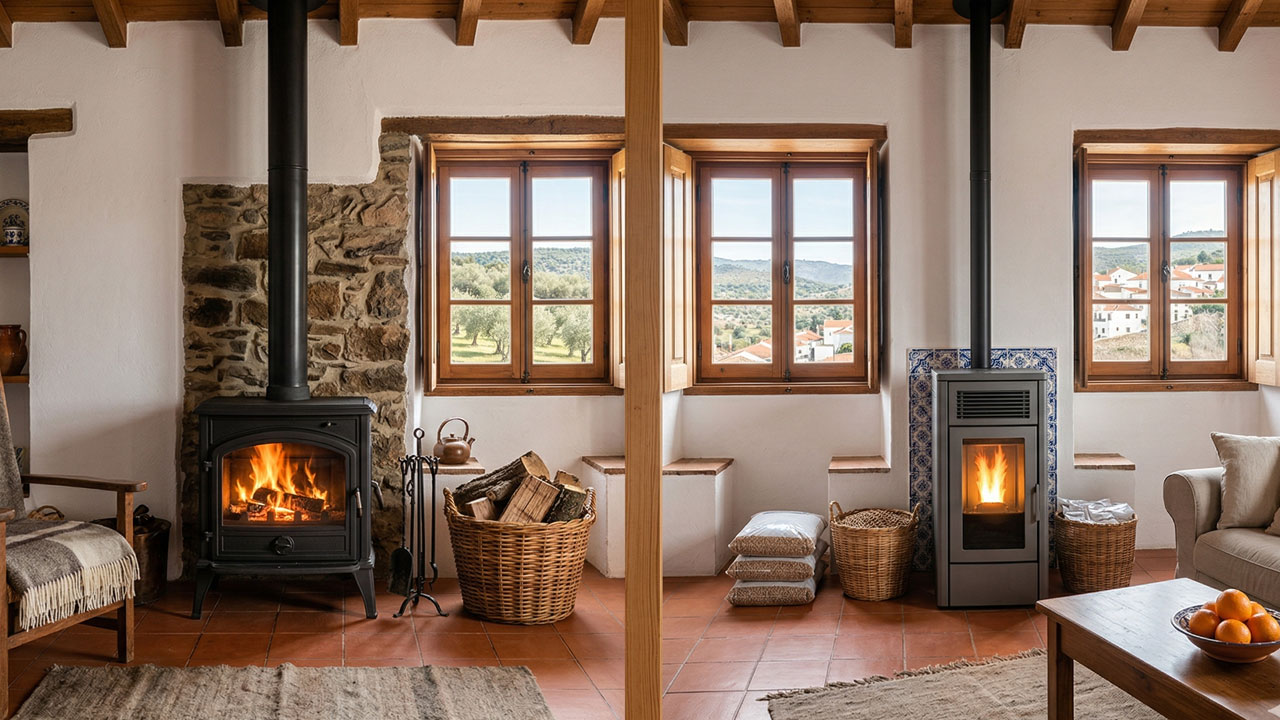
Choosing between a pellet stove and a wood stove is one of the most common decisions homeowners face when planning heating in Portugal.
Both systems are widely used and can provide effective heating, but they differ significantly in how they operate, the level of convenience they offer and the type of experience they create.
Understanding these differences helps homeowners select the solution that best matches their lifestyle and the characteristics of their home.
In Portugal, the choice between pellet and wood heating is often less about performance and more about convenience, independence and daily use habits.
How Pellet Stoves and Wood Stoves Work
Although both systems burn solid fuel, they operate in very different ways.
Pellet stoves use compressed wood pellets fed automatically into the combustion chamber. They regulate temperature electronically and can be programmed.
Wood stoves burn logs manually, requiring the user to manage fuel loading and airflow.
This fundamental difference defines how each system is used on a daily basis.
Key Differences Between Pellet and Wood Stoves
| Feature | Pellet Stove ⚙️ | Wood Stove 🔥 |
|---|---|---|
| Operation | Automatic | Manual |
| Temperature control | Precise | User-controlled |
| Electricity required | Yes ⚡ | No |
| Maintenance | Regular cleaning | Ash removal |
| Atmosphere | Moderate | Strong 🔥 |
Both systems are capable of heating living spaces effectively when properly sized.
Convenience vs Independence
One of the main differences between these systems is how they fit into daily life.
Pellet stoves are designed for convenience:
• automatic ignition and shutdown
• programmable schedules
• steady heat without constant attention
Wood stoves offer independence:
• no need for electricity
• full control over the fire
• reliable operation during power outages
Homeowners often choose based on which of these factors is more important to them.
Heating Performance in Portuguese Homes
Both pellet and wood stoves perform well in Portuguese homes, especially when used to heat main living areas.
However, performance can feel different in practice.
Pellet stoves:
• maintain consistent temperatures
• are ideal for continuous heating
• suit modern and insulated homes
Wood stoves:
• produce intense radiant heat
• heat spaces quickly
• are well suited to older or rural houses
Fuel Considerations
Fuel availability and handling also play an important role in the decision.
Pellets:
• sold in bags or pallets
• easy to store and handle
• require regular supply planning
Firewood:
• widely available in many regions
• may require storage space
• involves more manual handling
In rural areas, firewood is often easier to source, while in urban areas pellets may be more convenient.
Running Costs
Running costs depend on usage, fuel prices and efficiency.
| Aspect | Pellet Stove 💶 | Wood Stove 💶 |
|---|---|---|
| Fuel cost | Moderate | Low (often) |
| Consumption control | Precise | Variable |
| Efficiency | High | High |
In many cases, wood heating can be more economical, especially if firewood is locally sourced.
Which System Is Better for Expats?
The choice often depends on lifestyle preferences.
Pellet stoves are ideal for homeowners who:
• want automated heating
• prefer precise temperature control
• are familiar with central heating systems
Wood stoves are ideal for those who:
• value independence from electricity
• enjoy managing a real fire
• want strong, natural heat
Both systems can be excellent choices when properly matched to the home.
Can You Combine Both Systems?
Some homeowners choose to combine pellet and wood heating.
For example:
• pellet stove for daily convenience
• wood stove for atmosphere and backup
This hybrid approach offers flexibility and ensures heating even during power outages.
Frequently Asked Questions
Are pellet stoves better than wood stoves?
Not necessarily. Pellet stoves offer convenience, while wood stoves offer independence and stronger natural heat.
Which is cheaper to run in Portugal?
Wood stoves are often cheaper to run, especially when firewood is locally sourced.
Do pellet stoves need electricity?
Yes. Pellet stoves require electricity to operate.
Which system is best for older houses?
Wood stoves are often better suited to older houses due to their strong heat output.
🔗 Related Guides
If you want to explore the different heating systems used in Portuguese homes in more detail, these guides explain how each solution works and when it is most suitable.
Heating a House in Portugal
(overview of heating solutions for Portuguese homes)
Wood Heating
(wood stoves and fireplace inserts for powerful natural heat)
Pellet Heating
(automatic heating systems using compressed wood pellets)
Wood Cook Stoves
(traditional appliances that combine cooking and home heating)
Outdoor Fire
(fire pits, outdoor fireplaces and cooking systems for terraces and gardens)
🔗 Where to Find Heating Solutions in Portugal
Many of the heating systems discussed in this article are available from Smartfire, specialists in wood heating, pellet stoves and outdoor fire solutions.
Based in Portugal, Smartfire has helped thousands of homeowners choose the right heating systems for their homes, offering carefully selected products designed for reliability, efficiency and long-term performance.
The Smartfire team also provides support in English and works with installation partners across several regions of Portugal, including the Algarve.