
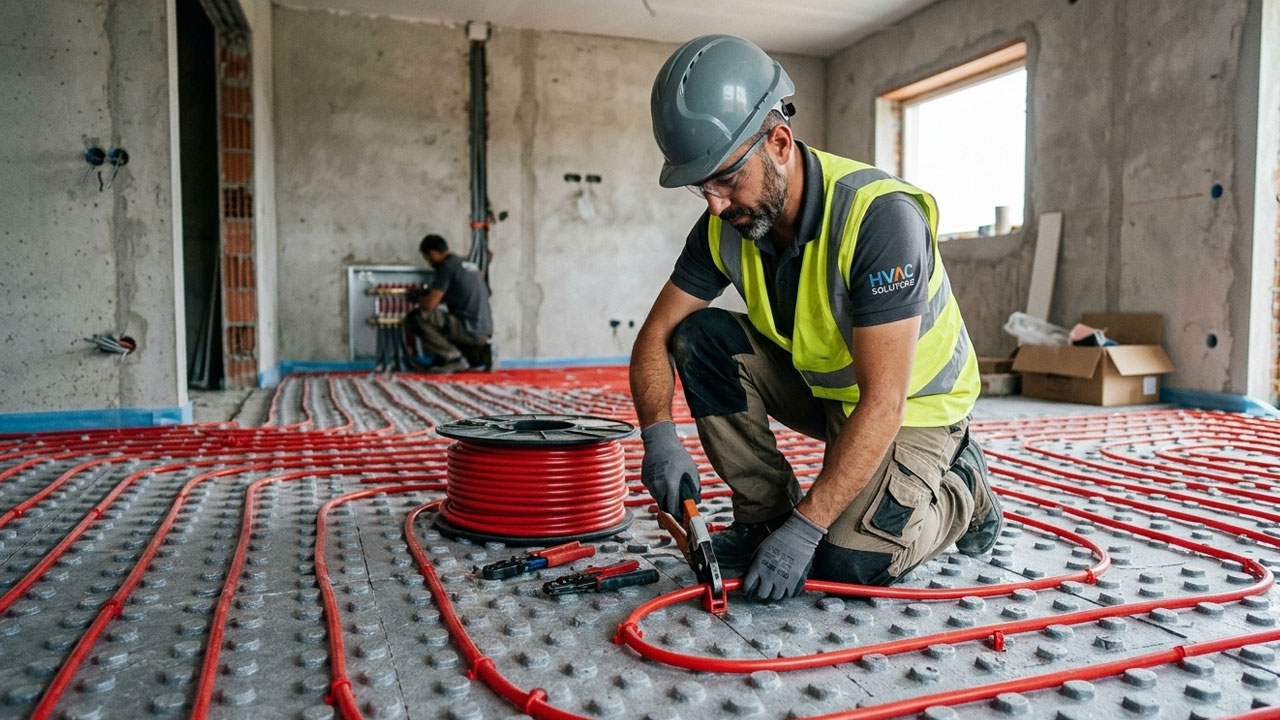
Underfloor heating is often associated with modern homes and high levels of comfort. For many expats moving to Portugal, it is a familiar system used widely in colder European countries.
However, its suitability in Portugal depends on several factors, including the type of house, insulation and how the property is used.
Understanding how underfloor heating works in Portuguese homes helps homeowners decide whether it is a worthwhile investment.
In Portugal, underfloor heating can provide excellent comfort, but its effectiveness depends heavily on insulation and usage patterns.
What Is Underfloor Heating?
Underfloor heating is a system that distributes heat evenly across the floor surface.
There are two main types:
• water-based (hydronic systems)
• electric systems
Both systems heat the floor, which then radiates warmth into the room.
How Underfloor Heating Works
Underfloor heating operates at lower temperatures than traditional radiators.
Instead of producing intense heat in a single location, it:
• distributes heat evenly
• maintains stable temperatures
• reduces cold spots
This creates a comfortable and consistent indoor environment.
Is Underfloor Heating Common in Portugal?
Underfloor heating is not yet widespread in Portugal, especially in older homes.
It is more commonly found in:
• new builds
• high-end villas
• fully renovated properties
In many traditional houses, installation can be more complex.
Advantages of Underfloor Heating
Underfloor heating offers several benefits.
• even heat distribution
• high comfort levels
• no visible radiators
• silent operation
• efficient when properly installed
It is particularly appealing in modern, well-insulated homes.
Limitations in Portuguese Homes
Despite its advantages, underfloor heating has some limitations in Portugal.
• requires good insulation
• higher installation cost
• slow response time
• less effective in poorly insulated houses
Without proper insulation, heat can be lost before it effectively warms the space.
Comparison with Other Heating Systems
| Heating System | Heat Type | Best Use |
|---|---|---|
| Underfloor heating 🔄 | Even and continuous | Modern, insulated homes |
| Wood stove 🔥 | Strong radiant heat | Older or large spaces |
| Pellet stove ⚙️ | Controlled and consistent | Daily heating with automation |
| Heat pump ❄️➡️🔥 | Air-based heating | Flexible use |
Each system serves different needs depending on the type of house.
Installation Considerations
Installing underfloor heating requires planning.
Important aspects include:
• floor construction
• insulation layers
• system type selection
• installation during construction or renovation
Retrofitting underfloor heating into existing homes can be more complex than installing other systems.
Running Costs
Running costs depend on the energy source and usage.
Factors include:
• electricity or heat pump efficiency
• insulation quality
• size of the heated area
• duration of use
When combined with efficient systems such as heat pumps, underfloor heating can be economical.
Is It Suitable for Holiday Homes?
Underfloor heating is not always ideal for holiday homes.
Reasons include:
• slow heating response
• need for continuous operation
• less flexibility for short stays
For occasional use, faster heating systems may be more practical.
What Expats Should Consider
For expats, underfloor heating may seem like an obvious choice, but local conditions are different.
Key considerations:
• level of insulation
• type of property
• usage patterns
• installation cost
In many cases, combining underfloor heating with other systems provides better results.
Frequently Asked Questions
Is underfloor heating worth it in Portugal?
It can be, especially in well-insulated modern homes.
Does underfloor heating work in old houses?
It is less effective unless the house is properly insulated.
Is underfloor heating expensive to install?
Yes. Installation costs are generally higher than other systems.
Is it good for year-round use?
Yes, particularly when used continuously in well-insulated homes.
🔗 Related Guides
If you want to explore the different heating systems used in Portuguese homes in more detail, these guides explain how each solution works and when it is most suitable.
Heating a House in Portugal
(overview of heating solutions for Portuguese homes)
Wood Heating
(wood stoves and fireplace inserts for powerful natural heat)
Pellet Heating
(automatic heating systems using compressed wood pellets)
Wood Cook Stoves
(traditional appliances that combine cooking and home heating)
Outdoor Fire
(fire pits, outdoor fireplaces and cooking systems for terraces and gardens)
🔗 Where to Find Heating Solutions in Portugal
Many of the heating systems discussed in this article are available from Smartfire, specialists in wood heating, pellet stoves and outdoor fire solutions.
Based in Portugal, Smartfire has helped thousands of homeowners choose the right heating systems for their homes, offering carefully selected products designed for reliability, efficiency and long-term performance.
The Smartfire team also provides support in English and works with installation partners across several regions of Portugal, including the Algarve.