
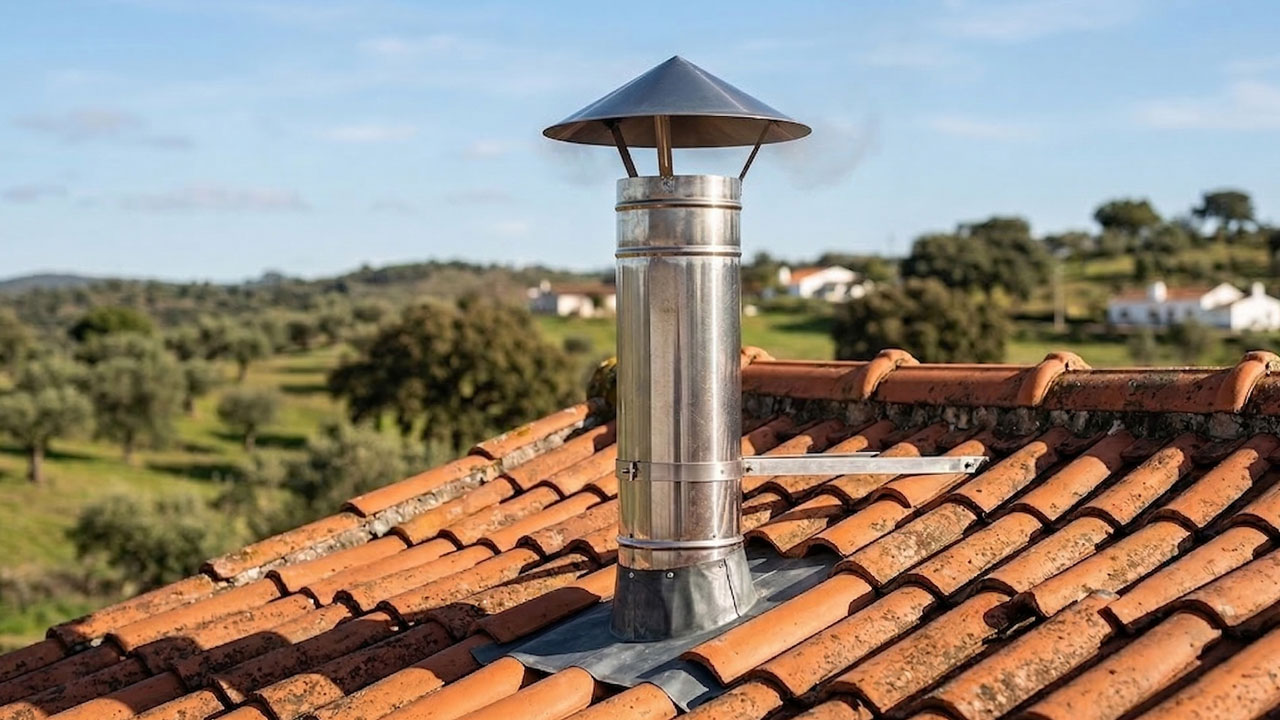
A chimney is one of the most important components of any wood stove installation. It directly affects how the stove performs, how safely it operates and how efficiently it heats the home.
In Portugal, many houses already have chimneys, but not all of them are suitable for modern wood stoves. Understanding how chimney systems work helps homeowners avoid common problems such as smoke inside the house or poor draft.
In wood heating, the chimney is not just an accessory — it is a critical part of the system that determines performance and safety.
Why the Chimney Is So Important
A wood stove relies on natural draft to function correctly. The chimney creates this draft by allowing hot air and gases to rise, pulling fresh air into the combustion chamber.
If the chimney is not correctly designed or installed, problems can occur:
• smoke entering the room
• difficulty lighting the fire
• poor combustion
• reduced heating efficiency
A properly installed chimney ensures stable and efficient operation.
Types of Chimneys in Portugal
Several types of chimney systems are used with wood stoves in Portugal.
| Chimney Type | Description | Suitability |
|---|---|---|
| Masonry chimney 🧱 | Traditional built-in chimney | Often needs adaptation |
| Stainless steel flue 🔩 | Metal pipe system | Very suitable and common |
| Insulated double-wall flue 🧯 | Double-layer insulated pipe | Ideal for new installations |
Modern installations often use stainless steel flue systems because they are easier to install and provide reliable performance.
Can You Use an Existing Chimney?
Many Portuguese homes have existing masonry chimneys, especially older houses.
However, these are not always suitable without modification.
Common issues include:
• incorrect diameter
• poor insulation
• internal damage or blockages
• unsuitable height
In many cases, installing a stainless steel liner inside the existing chimney improves performance and safety.
Chimney Height and Draft
The height of the chimney plays a crucial role in creating proper draft.
General principles include:
• taller chimneys improve draft
• straight vertical runs perform better
• fewer bends increase efficiency
If the chimney is too short or poorly positioned, the stove may not function correctly.
Common Chimney Problems
Several problems can occur when the chimney is not correctly designed or installed.
• smoke entering the room
• difficulty maintaining a fire
• excessive soot buildup
• condensation inside the flue
These issues are often related to draft problems or incorrect sizing.
Safety Considerations
Chimney safety is essential when using a wood stove.
Important aspects include:
• correct installation
• proper insulation
• safe distance from combustible materials
• regular inspection and cleaning
A well-installed chimney reduces risks and ensures long-term reliability.
Chimney Maintenance
Regular maintenance is necessary to keep the chimney working properly.
Typical maintenance includes:
• cleaning soot and creosote buildup
• checking for blockages
• inspecting joints and connections
• ensuring proper airflow
Annual inspection is generally recommended, especially before the heating season.
Do Expats Need to Upgrade Chimneys?
Many expats buying property in Portugal need to adapt or upgrade existing chimney systems.
Common situations include:
• converting open fireplaces into inserts
• installing new wood stoves
• improving draft performance
Professional installation is highly recommended to ensure safety, correct operation, compliance with standards and to maintain the validity of the manufacturer’s warranty.
Frequently Asked Questions
Do you need a chimney for a wood stove?
Yes. A wood stove requires a chimney to safely remove smoke and gases.
Can you use an existing chimney in Portugal?
Sometimes. Existing chimneys may need modification or lining to work properly with modern stoves.
What is the best chimney type for a wood stove?
Insulated stainless steel flue systems are commonly used and provide reliable performance.
How often should a chimney be cleaned?
Chimneys should typically be inspected and cleaned at least once a year.
🔗 Related Guides
If you want to explore the different heating systems used in Portuguese homes in more detail, these guides explain how each solution works and when it is most suitable.
Heating a House in Portugal
(overview of heating solutions for Portuguese homes)
Wood Heating
(wood stoves and fireplace inserts for powerful natural heat)
Pellet Heating
(automatic heating systems using compressed wood pellets)
Wood Cook Stoves
(traditional appliances that combine cooking and home heating)
Outdoor Fire
(fire pits, outdoor fireplaces and cooking systems for terraces and gardens)
🔗 Where to Find Heating Solutions in Portugal
Many of the heating systems discussed in this article are available from Smartfire, specialists in wood heating, pellet stoves and outdoor fire solutions.
Based in Portugal, Smartfire has helped thousands of homeowners choose the right heating systems for their homes, offering carefully selected products designed for reliability, efficiency and long-term performance.
The Smartfire team also provides support in English and works with installation partners across several regions of Portugal, including the Algarve.